
Optical Switch Comparison: MEMS vs Magneto-Optic vs Mechanical vs OCS
Updated at Sep 14th 2026 Views 4
In modern optical networks, the optical switch serves as the critical component that routes light signals between fiber ports without converting them to electrical form. Whether you are building a network protection system, a fiber sensing platform, or a next-generation AI data center interconnect, understanding the differences between different optical switchs is essential for selecting the right solution.
This guide compares these core optical switching technologies across switching speed, insertion loss, reliability, scalability, and application fit, helping engineers and network architects make informed decisions.
What Is an Optical Switch?
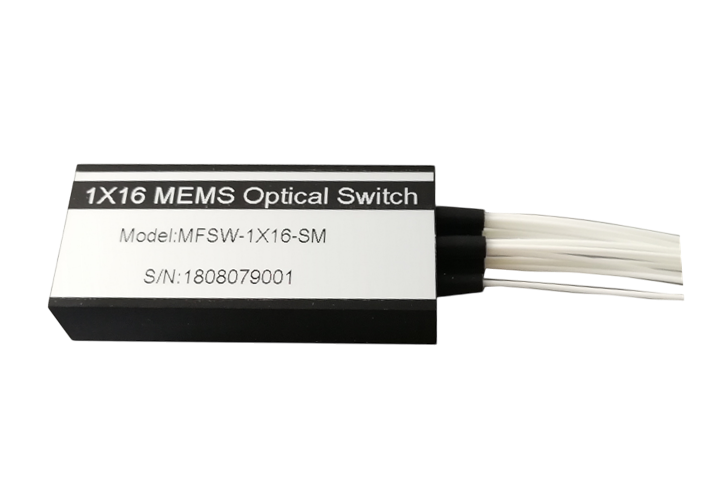
An optical switch is a device that enables the on/off control or path redirection of optical signals in a fiber network. It is a foundational building block for optical line protection (OLP), reconfigurable optical add-drop multiplexers (ROADM), optical cross-connects (OXC), and optical circuit switching systems. Different switching technologies offer distinct trade-offs between speed, loss, cost, and scalability.
1. Mechanical Optical Switch: The Reliable Workhorse
Traditional mechanical optical switches move optical fibers or prisms to physically redirect light from one port to another. This mature technology is known for its dependable performance and is widely used in network protection and laboratory instrumentation.
Key characteristics:
Insertion loss: Typically below 1 dB, the lowest among all switch types
Isolation: High, often exceeding 50 dB
Switching speed: Millisecond range (1–10 ms), suitable for protection switching
Polarization and wavelength dependence: None — operates independently of both
Lifetime: Limited by mechanical wear, typically around 1 million cycles
Port count: Constrained; commonly available in 1×2, 1×4, 2×2, and up to 1×8 or 4×4 configurations
Mechanical switches are available in both latching and non-latching variants. A latching switch maintains its last state even after power is removed, requiring power only to change state — an important feature for power-sensitive deployments.
Best suited for: Optical line protection, fiber-optic testing, laboratory signal routing, and cost-sensitive applications where millisecond switching is sufficient.
All Mechanical Switch Products.
2. MEMS Optical Switch: The Agile Performer
MEMS (Micro-Electro-Mechanical Systems) optical switches use microscopic mirrors etched on silicon to redirect light beams. An electrical signal tilts a tiny mirror to connect an input port to a selected output port. This approach delivers an excellent balance of speed, compact size, and durability.
Key characteristics:
Switching speed: Microsecond range (5–500 μs), far faster than mechanical switches
Insertion loss: Typically 2–6 dB, moderately higher than mechanical types
Isolation: 30–40 dB, adequate for most matrix switching applications
Integration: High — supports 1×N to N×N large-scale arrays on a single chip
Lifetime: Very long, with some MEMS switches rated for over 10 billion cycles due to the absence of physical friction
Power consumption: Low
Port scalability: Can reach 1×128 or larger in single-device configurations
The primary drawbacks are higher insertion loss compared to mechanical switches and the need for precise control electronics to manage mirror positioning.
Best suited for: Optical cross-connect (OXC) nodes, large-scale optical switching matrices, multi-channel monitoring, and automated test equipment requiring frequent channel changes.
All MEMS Optical Switch products.
3. Magneto-Optic Switch: The Solid-State Specialist
Magneto-optic (MO) switches operate on a purely non-mechanical principle, making them exceptionally robust against vibration and wear. An electrical current generates a magnetic field that rotates a magneto-optic crystal to change the light's path through the Faraday effect.
Key characteristics:
Switching speed: Sub-microsecond to microsecond range; some designs achieve rise times as fast as 75 ns
Moving parts: None — fully solid-state construction
Reliability: Extremely high, with operational lifetimes reaching 10 billion cycles
Shock and vibration tolerance: Superior due to the absence of mechanical components
Built-in functionality: Many MO switches integrate optical isolator/circulator functions, protecting sensitive laser sources from back reflections without additional components
Typical configurations: 1×2, 1×4, 2×2
Best suited for: Aerospace, military communications, high-reliability systems, and any environment where mechanical failure is not an option.
4. Optical Circuit Switch (OCS): The All-Optical Network Core
An Optical Circuit Switch (OCS) is a system-level switching platform that routes optical signals between fiber ports entirely in the optical domain, without optical-electrical-optical (OEO) conversion. Unlike traditional packet switches, OCS establishes reconfigurable point-to-point optical paths, enabling end-to-end all-optical transmission.
OCS addresses the growing limitations of electrical switching in AI training clusters and hyperscale data centers, where high power consumption, latency, and bandwidth bottlenecks demand a fundamentally different approach.
Key characteristics:
Switching granularity: Optical port level (not packet level)
Latency: Extremely low — approximately 5 ns per hop, eliminating optical module delays
Protocol transparency: Supports any data rate and protocol without conversion
Power efficiency: A 500+ port OCS platform can operate on as little as 245 watts
Port scalability: Current mainstream systems range from 8×8 to 300+ ports, with next-generation platforms targeting even higher radix
Available configurations: 8×8, 16×16, 32×32, 48×48, and MxN MEMS-based OCS
OCS platforms commonly leverage MEMS mirror arrays as the underlying switching engine, though alternative technologies such as digital liquid crystal (DLC), piezoelectric beam steering (DBS), and silicon photonics (SiPh) are also under active development. MEMS remains the most mature route, offering strong port extensibility and controllable production costs.
Best suited for: AI training clusters, hyperscale data center interconnects, spine-layer network reconfiguration, and any scenario requiring dynamic, high-port-count all-optical path provisioning.
All Optical Circuit Switch products.
Technology Comparison at a Glance
|
Parameter |
Mechanical Optical Switch |
MEMS Optical Switch |
Magneto-Optic Switch |
Optical Circuit Switch (OCS) |
|
Switching mechanism |
Physical movement of fiber/prism |
Micro-mirror tilting on silicon |
Faraday effect in magneto-optic crystal |
System-level optical path routing |
|
Switching speed |
1–10 ms |
5–500 μs |
Sub-μs to μs |
ms (system-level) |
|
Insertion loss |
< 1 dB |
2–6 dB |
Low |
Varies by architecture |
|
Isolation |
> 50 dB |
30–40 dB |
High |
High |
|
Lifetime |
~1M cycles |
> 10B cycles |
≥ 10B cycles |
System-dependent |
|
Moving parts |
Yes |
Yes (micro-scale) |
No |
Yes (at system level) |
|
Port scalability |
Limited (≤ 1×8) |
High (up to 1×128+) |
Low (1×2 to 2×2) |
Very high (300+ ports) |
|
Polarization dependence |
None |
Low |
Maintained |
Low |
|
Relative cost |
Low |
Moderate |
High |
High (system-level) |
|
Best application |
Protection switching, testing |
OXC, matrix switching |
Aerospace, defense |
AI data center, hyperscale interconnect |
How to Choose the Right Optical Switch
The selection depends on your specific requirements:
1.For cost-sensitive protection switching where millisecond response is adequate, mechanical optical switches offer the best value with the lowest insertion loss.
2.For high-density matrix switching in OXC nodes or automated test systems, MEMS optical switches provide the optimal combination of speed, integration, and reliability.
3.For mission-critical environments requiring immunity to vibration and shock, magneto-optic switches deliver solid-state reliability with built-in isolation.
4.For large-scale AI and cloud data center interconnects that demand dynamic, high-port-count all-optical path provisioning, OCS platforms built on MEMS or silicon photonics offer the scalability and power efficiency required for next-generation workloads.
Conclusion
From the proven reliability of mechanical switches to the agile performance of MEMS, the solid-state robustness of magneto-optic designs, and the system-level intelligence of Optical Circuit Switches, each technology occupies a distinct position in the optical networking ecosystem. Understanding their comparative strengths allows network designers to match the right switching solution to the right application — optimizing for performance, cost, and long-term scalability.
For more articles on the comparison of the three optical switch types and additional detailed information, please refer to our product page Optical Switch(OSW/FSW/MEMS/OCS)or read our earlier articlesThree Types of Optical Switches Compared: MEMS vs. Mechanical vs. Magneto-Optic. For purchasing inquiries or further questions, please contact our expert team Contact Us.
Related news
- Comprehensive Guide to Optical Isolators: Types, Working Principles, and Applications
- Comprehensive Guide to WDM Technology: Products, Applications, and Solutions
- How to Choose a Photodetector for Optical Communication Systems
- Why AWG Is the Preferred Choice for Next-Generation Optical Multiplexing
- Photodetector Module Guide: Types, Applications, Specifications and Selection Tips
- The Essential Role of Optical Switches in Modern Test and Measurement Applications
- SFP Transceiver Modules 2026: The Ultimate Buying Guide for Network Engineers
- Optical Channel Monitor (OCM) | DWDM Network Monitoring Solutions | GLHC
- What Is an SFP Transceiver Module?
- Key Parameters of Optical Communication Equipment: A Comprehensive Guide
