
Why Optical Circuit Switching Is Suddenly Everywhere (And What It Means for Your Network)
Updated at Jul 27th 2026 Views 672
If you’ve been watching the data center space lately, you’ve probably noticed a new acronym popping up everywhere: OCS. Optical Circuit Switching. It sounds technical, and honestly, it kind of is. But here’s the thing—it’s also one of the most practical solutions to a problem that’s been keeping network engineers up at night.
The problem? Power bills. Latency. Scaling AI clusters without breaking the bank. Traditional switches were never designed for the kind of traffic AI workloads generate. So people started looking for something different. And that’s where OCS came in.
So What Exactly Is OCS?
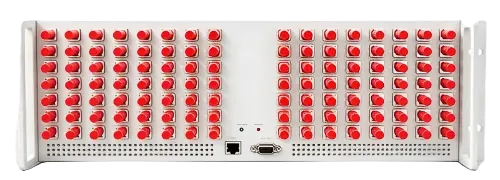
A picture of M×N Optical Circuit Switch
Let me put it this way.
A regular network switch takes an optical signal, converts it to electricity, figures out where it needs to go, converts it back to light, and sends it on its way. That’s a lot of back-and-forth. Every conversion burns power and adds delay.
An Optical Circuit Switch skips all that. It keeps the signal in the optical domain the whole time. Think of it like a mirror that redirects a beam of light from one fiber to another—no conversion, no processing, just a straight shot. The result is lower latency, less power consumption, and a simpler path from point A to point B.
Industry data suggests OCS can cut the overall power consumption of AI computing clusters by more than 30%. That’s not a small number.
Why Now?
OCS isn’t new technology. It’s been around for a while. But it’s having a moment right now, and the reason is pretty straightforward: AI.
Google, Microsoft, and Meta have been deploying OCS in their data centers for a while now. They’re not doing it because it sounds cool. They’re doing it because it works.
Where Does OCS Actually Get Used?
This is where it gets interesting, because OCS isn’t just for massive Google-scale deployments. There are a bunch of practical applications that are relevant to a lot more organizations.
AI Data Centers – This is the big one. If you’re connecting thousands of GPUs, you need a network that doesn’t become the bottleneck. OCS creates direct optical paths between compute nodes, which means less waiting and more actual computing. Some industry estimates suggest GPUs in traditional setups are only utilized at about 25% efficiency because of network constraints. OCS helps close that gap.
Fiber Monitoring – If you’re running long-haul networks or submarine cables, you know how painful it is to locate a fiber cut. OCS-based monitoring systems can automatically switch test signals to different fibers, pinpointing faults in minutes instead of hours.
Test and Measurement Labs – R&D teams use matrix optical switches to route signals from multiple sources to multiple detectors without manually repatching cables. Saves time, reduces errors.
Disaster Recovery and Network Protection – With OCS, you can reconfigure optical paths on the fly. A link goes down? Reroute traffic in seconds.
What GLHCLink Offers
GLHCLink carries a full range of OCS equipment, from small-scale matrix switches up to high-density rackmount solutions.
Optical Circuit Switch OCS Equipment-光通信方案提供商-恒创科技
The lineup includes:
8×8 Rackmount Matrix Optical Switch – Entry-level, good for smaller deployments or lab environments
16×16 Rackmount MEMS Matrix Optical Switch – Mid-range, suitable for enterprise core networks
32×32 Rackmount MEMS Matrix Optical Switch – Larger aggregation layer applications
48×48 Rackmount Matrix Optical Switch – High-capacity, designed for demanding data center environments
64x64 MEMS Matrix Optical Switch Equipment – Custom configurations for specialized needs
All of these use MEMS technology—basically, tiny micro-mirrors etched onto silicon that tilt to steer light beams. It’s a proven approach that offers low insertion loss, fast switching speeds, and high reliability. And because GLHCLink offers both standard rackmount and custom M×N configurations, you can fit OCS into just about any network design.
A Couple Things to Keep in Mind
If you’re thinking about OCS, here are a few practical considerations:
It’s not a drop-in replacement for everything. OCS excels at circuit switching—establishing dedicated paths that stay in place for the duration of a session. It’s not designed to replace packet switching for every scenario. But for AI workloads, large-scale data movement, and network monitoring, it’s a great fit.
The hardware lasts. One thing people don’t always realize is that OCS switch hardware can be reused across generations. You’re not stuck replacing everything every few years. That’s a significant cost advantage over traditional switching gear.
The ecosystem is growing. The Open Compute Project established an OCS project group in 2025 with founding members including Google, Microsoft, Meta, and NVIDIA. That means open standards, better interoperability, and more options coming down the pipe.
The Bottom Line
Look, I’m not going to tell you that every network needs OCS tomorrow. But if you’re dealing with AI workloads, scaling GPU clusters, or just trying to bring down power costs in a high-traffic data center, it’s worth a serious look.
The market is growing fast. The technology is proven. And the product options are getting more accessible by the day.
GLHCLink’s OCS portfolio—from 8×8 to 48×48 and everything in between—gives you a place to start. Whether you’re upgrading an existing facility or designing something new, there’s probably a configuration that fits.
For more information on GLHCLink’s Optical Circuit Switch products,you are welcome to contact us.
Related news
- Single Mode vs Multimode Fiber: Key Differences and How to Choose
- Optical Switch Comparison: MEMS vs Magneto-Optic vs Mechanical vs OCS
- Comprehensive Guide to Optical Isolators: Types, Working Principles, and Applications
- Comprehensive Guide to WDM Technology: Products, Applications, and Solutions
- How to Choose a Photodetector for Optical Communication Systems
- Why AWG Is the Preferred Choice for Next-Generation Optical Multiplexing
- Photodetector Module Guide: Types, Applications, Specifications and Selection Tips
- The Essential Role of Optical Switches in Modern Test and Measurement Applications
- SFP Transceiver Modules 2026: The Ultimate Buying Guide for Network Engineers
- Optical Channel Monitor (OCM) | DWDM Network Monitoring Solutions | GLHC
