
Optical Line Protection (OLP): Features, Applications, and Working Principle
Updated at Oct 09th 2026 Views 10
Introduction
In today's high-capacity optical networks, service continuity is critical. A single fiber cut or degraded link can disrupt voice, data, and video traffic across entire regions. Optical Line Protection (OLP) technology provides a reliable answer by automatically switching traffic from a failed primary fiber to a backup path—without affecting the transmitted signal. This article introduces three key OLP solutions: 1:1 OLP, 1+1 OLP, and the Optical Fiber Line Auto Switch Protection System, covering their working principle, features, technical specifications, and applications.
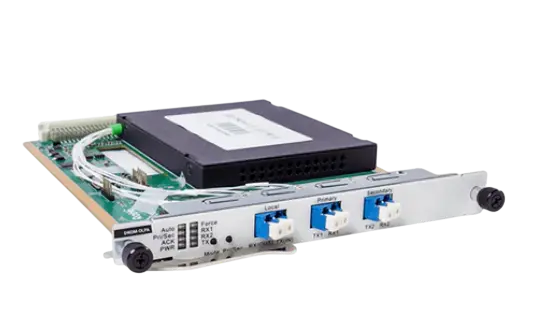
Optical Line Protection product (OLP)
What Is Optical Line Protection (OLP)?
Optical Line Protection (OLP) is an automatic monitoring and protection system built on the physical fiber link, independent of the communication transmission system. It ensures uninterrupted service by performing dual feeding at the transmitting end and intelligent selective receiving at the receiving end between the working fiber and protection fiber. When the primary fiber experiences a fault or performance degradation, the OLP system automatically switches to the backup fiber.
OLP operates purely in the optical layer, offering transparent transmission, ultra-low latency, and minimal insertion loss. It compresses optical cable fault recovery time from the hour level to the millisecond level, effectively ensuring the safe and stable operation of optical communication networks.
Working Principle
The OLP system continuously monitors the optical power of both the primary and secondary fibers in real time. When the primary fiber is accidentally broken or its performance degrades, the OLP automatically switches the working channel from primary to secondary. When the primary path fails, the sender and receiver switch to the secondary path simultaneously.
The system uses vacant optical fiber from different routes to build a backup path. By monitoring the power status in the working fiber, it automatically switches from working fiber to backup fiber when the power value drops below a user-defined threshold. This provides a more reliable, flexible, and secure optical transmission network.
Product Types
1:1 OLP Module
The 1:1 OLP module adopts selective emission and selective reception, with two fiber paths—a primary path and a secondary path. When the primary path fails, the sender and receiver switch to the secondary path simultaneously. It is widely used in PDH, SDH, C/DWDM systems, and power communication private networks.
To know more information about it,please click here. 1:1 Optical Line protection Module (OLP 1:1)
1+1 OLP
The 1+1 OLP protection scheme uses dual transmitting and selective receiving. The signal is transmitted simultaneously over both the primary and backup fibers. At the receiving end, the system intelligently selects the better signal. When the primary fiber fails, the receiver switches to the backup fiber with carrier-grade speed. The 1+1 OLP is available in compact 1U equipment, supporting 1+1, 1:1, and 1-1 protection methods, with panel key control and LCD display.
To know more information about it,please click here. 1+1 Optical Line Protection Module (OLP1+1)
The 1+1 OLP shares the same optical performance specifications as the Optical Fiber Line Auto Switch Protection System listed below.
Optical Fiber Line Auto Switch Protection System
The Optical Fiber Line Auto Switch Protection System uses vacant optical fiber from different routes to build a backup path. By monitoring the power status in the working fiber, it automatically switches from working fiber to backup fiber when the power value drops below a user-defined threshold. The system works in the optical layer with transparent transmission to optical signals and supports unified network management (NMS).
To know more information about it,please click here.Optical Fiber Line Auto Switch Protection System
Key Features
Optical Layer Operation – Works in the optical layer with transparent transmission to optical signals, independent of protocol and data rate.
High Optical Performance – Low insertion loss and high return loss ensure signal integrity.
Carrier-Grade Switching Speed – Fast switching times meet carrier-grade requirements.
Dual Power Supply Redundancy – Ensures continuous operation even if one power source fails.
Unified Network Management – Supports NMS for centralized monitoring and control.
Multiple Protection Modes – Supports 1+1, 1:1, and 1-1 protection methods.
Compact 1U Form Factor – Easy deployment with panel key control and LCD display.
Applications
OLP systems are widely deployed in scenarios where network availability is paramount:
Telecommunications Backbone – Protects backbone and important business lines in PDH, SDH, and C/DWDM systems.
Power Communication Networks – Ensures reliable transmission of production control services; OLP compresses fault recovery time from hours to milliseconds.
DWDM Line Protection – Provides line-side protection for DWDM transmission systems.
CATV Optical Networks – Ensures continuous service delivery.
Data Centers – Protects inter-data-center links and mission-critical connections.
5G Fronthaul and Backhaul – Meets low-latency, high-availability requirements.
Fiber Quality Monitoring – Enables real-time monitoring of fiber quality and emergency dispatching of working routes.
Conclusion
Optical Line Protection (OLP) technology is essential for resilient optical network design. The 1:1 OLP Module, 1+1 OLP, and Optical Fiber Line Auto Switch Protection System offer transparent, millisecond-level protection switching between primary and backup fiber paths. With low insertion loss, high return loss, dual power redundancy, and support for NMS, these solutions deliver carrier-grade reliability for telecommunications, power communication, data center, and CATV networks.
For more information on OLP products and customization options, please contact HC Optical directly.
Related news
- MEMS Optical Circuit Switch Selection Guide: How to Choose the Right Rackmount OCS
- Optical Amplifiers: The Engine Behind Modern Fiber Optic Networks
- Single Mode vs Multimode Fiber: Key Differences and How to Choose
- Optical Switch Comparison: MEMS vs Magneto-Optic vs Mechanical vs OCS
- Comprehensive Guide to Optical Isolators: Types, Working Principles, and Applications
- Comprehensive Guide to WDM Technology: Products, Applications, and Solutions
- How to Choose a Photodetector for Optical Communication Systems
- Why AWG Is the Preferred Choice for Next-Generation Optical Multiplexing
- Photodetector Module Guide: Types, Applications, Specifications and Selection Tips
- The Essential Role of Optical Switches in Modern Test and Measurement Applications
